William Chester Jordan
Crusader Prologues: Preparing for War in the Gothic Age
Tuesday November 3, 2009 7:30 p.m.
O'Laughlin Auditorium
Saint Mary's College
Free and open to the public
About Speaker William Chester Jordan
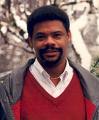 William Chester Jordan is the Dayton-Stockton Professor of History and Chair of the History Department at Princeton University. His many books on medieval culture include Louis IX and the Challenge of the Crusade: A Study in Rulership (1980), The French Monarchy and the Jews from Philip Augustus to the Last Capetians (1989), Women and Credit in Pre-Industrial and Developing Societies (1993), The Great Famine: Northern Europe in the Early Fourteenth Century (which received the Medieval Academy of America’s Haskins Medal for the outstanding book on the Middle Ages for 2000), Europe in the High Middle Ages (2001), and Unceasing Strife, Unending Fear: Jacques de Therines and the Freedom of the Church in the Age of the Last Capetians (2005). His latest book is A Tale of Two Monasteries: Westminster and Saint-Denis in the Thirteenth Century (2009). He is currently the president of the American Catholic Historical Association.
About His Talk
How did crusaders prepare themselves and those they were leaving behind psychically and spiritually for a holy war? The lecture addresses several aspects of this preparation and hopes thereby to enrich our understanding of the crusades in general.

I thought Professor William Chester Jordon’s conference on the preparation for the crusades was insightful not only for the information he shared but also the information that he did not discuss. It was fascinating to learn how the crusaders, those who “take the cross,” went to such lengths to prepare themselves for the holy war. First there was the confession, then the invocation of patron saints, next the blessing of the weapons, and finally the writing of a will. It was neat to learn that the will originated during the Crusades. I also liked at the end of the conference when Professor Jordon “summed up” by clarifying that most of his text refer to crusaders from Northern France. The professor also mentioned topics that he did not address in the conference, such as "how the ones left behind prepared for the crusade" or "the role of women in the crusades" or "how the enemy prepared for war." By mentioning the other topics related to the preparation of the crusaders, Professor Jordon reminded the audience that the information given pertains to a particular category, for me it was a reminder not to generalize. The mentioning of the other topics gave a taste of what else I can learn about the crusades.
ReplyDelete